sábado, 17 de dezembro de 2005

American heroes (5): Robert Green Ingersoll

«They knew that to put God in the Constitution was to put man out. They knew that the recognition of a Deity would be seized upon by fanatics and zealots as a pretext for destroying the liberty of thought. They knew the terrible history of the church too well to place in her keeping, or in the keeping of her God, the sacred rights of man. They intended that all should have the right to worship, or not to worship; that our laws should make no distinction on account of creed. They intended to found and frame a government for man, and for man alone. They wished to preserve individuality of all; to prevent the few from governing the many, and the many form persecuting and destroying the few.»

(Robert Green Ingersoll, 1833-1899; conhecido como «o Grande Agnóstico», Ingersoll foi durante toda a vida um defensor do laicismo, da liberdade de expressão, do direito de voto das mulheres e do fim da escravatura.)

quinta-feira, 15 de dezembro de 2005

Citações republicanas (2): Albert Camus

«La démocratie, ce n'est pas la loi de la majorité, mais la protection de la minorité.»

(Albert Camus, 1913-1960; Carnets.)

quarta-feira, 14 de dezembro de 2005

Regresso à Pátria

Manuel Alegre usa a palavra pátria. Não me incomoda nada, porque percebo que se refere a uma comunidade de Direito, valores cívicos e interesses, historicamente consolidada, e inclusiva (ver a defesa que faz de uma lei da nacionalidade baseada no direito de solo). Aborrece-me mais o europeísmo de outros candidatos, porque (esse sim) é provinciano (imagina que lá fora tudo é melhor), ingénuo (não vê que a UE não é o fim da história) e incondicional (apoia o projecto europeu quer este seja laico ou confessional, democrático ou não).
O posicionamento desempoeirado e descomplexado de Manuel Alegre na política internacional (e é isso que a política europeia continua a ser) constitui uma grande novidade desta campanha e permanece uma das melhores razões para votar nele. Mas gostaria de ver um pouco mais de ousadia e ambição...

terça-feira, 13 de dezembro de 2005

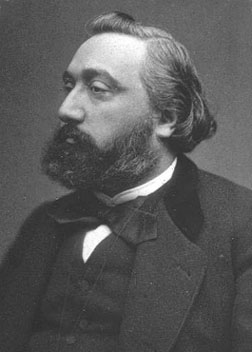
Citações republicanas (1): Leon Gambetta


«Ce qui constitue la vraie démocratie, ce n'est pas de reconnaître des égaux, mais d'en faire.»
(Leon Gambetta, 1838-1882; avisam-se os leitores de que este blogue será ainda mais aborrecido daqui em diante...)

segunda-feira, 12 de dezembro de 2005

sexta-feira, 9 de dezembro de 2005

American heroes (3.1): Thomas Paine

«It is for the good of nations and not for the emolument or aggrandisement of particular individuals, that government ought to be established, and that mankind are at the expense of supporting it. The defects of every government and constitution both as to principle and form, must, on a parity of reasoning, be as open to discussion as the defects of a law, and it is a duty which every man owes to society to point them out. When those defects, and the means of remedying them, are generally seen by a nation, that nation will reform its government or its constitution in the one case, as the government repealed or reformed the law in the other. The operation of government is restricted to the making and the administering of laws; but it is to a nation that the right of forming or reforming, generating or regenerating constitutions and governments belong; and consequently those subjects, as subjects of investigation, are always before a country as a matter of right, and cannot, without invading the general rights of that country, be made subjects for prosecution. On this ground I will meet Mr. Burke whenever he please.»
(Thomas Paine, no Prefácio de The Rights of Man, 1792.)

quarta-feira, 7 de dezembro de 2005

American heroes (2.1): James Madison

«If we resort for a criterion to the different principles on which different forms of government are established, we may define a republic to be, or at least may bestow that name on, a government which derives all its powers directly or indirectly from the great body of the people, and is administered by persons holding their offices during pleasure, for a limited period, or during good behavior. It is essential to such a government that it be derived from the great body of the society, not from an inconsiderable proportion, or a favored class of it; otherwise a handful of tyrannical nobles, exercising their oppressions by a delegation of their powers, might aspire to the rank of republicans, and claim for their government the honorable title of republic. It is sufficient for such a government that the persons administering it be appointed, either directly or indirectly, by the people; and that they hold their appointments by either of the tenures just specified; otherwise every government in the United States, as well as every other popular government that has been or can be well organized or well executed, would be degraded from the republican character.»
(James Madison no Federalist Papers nº39, 1788.)

terça-feira, 6 de dezembro de 2005

Revista de blogues (6/12/2005)

  1. «O bispo de Coimbra», por Carlos Esperança, no Ponte Europa.
  2. «Laicidade», por aaa, no Sopa de Nabos.
  3. «A Sopa», por Miguel Vale de Almeida, n´Os Tempos que Correm.
  4. «A cruz na parede», por José Vítor Malheiros, no Selecção de Crónicas de Imprensa.